
Managed firewall services are crucial for ensuring your organization’s security in today’s digital landscape. These services provide comprehensive management of firewalls, monitoring network traffic, and detecting threats in real-time. If you’re seeking a quick understanding, here’s what managed firewall services offer:
- 24/7 monitoring and protection
- Automated threat detection and response
- Compliance with security standards
Managed firewall services serve as sentries guarding your network, helping prevent unauthorized access and cyber threats before they impact your business operations.
Today, network security isn’t just a priority; it’s a necessity. Proper firewall management offers not just protection but peace of mind by addressing cybersecurity needs efficiently and effectively.
“Firewall misconfigurations and security gaps are the rule, rather than the exception.” – Security Analysts
As the founder and CEO of NetSharx Technology Partners, Ryan Carter, I’ve witnessed how managed firewall services can transform a company’s security posture. With years of experience helping organizations leverage these services, I’m dedicated to simplifying technology purchases and enhancing cybersecurity measures.
Understanding Managed Firewall Services
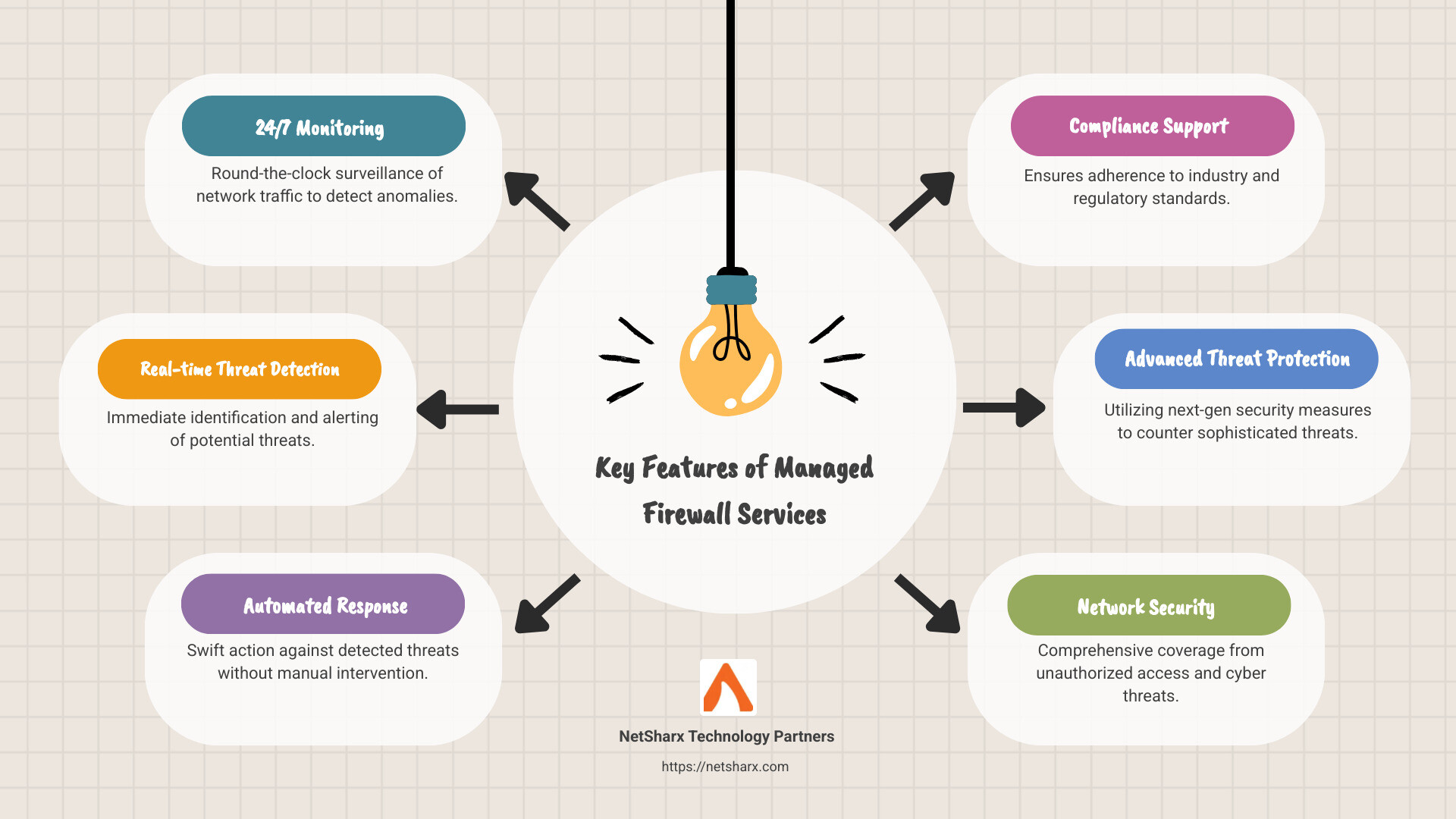
Key Features
Managed firewall services are the backbone of network security. These services involve the operation, administration, monitoring, and maintenance of firewalls, ensuring your network remains secure from cyber threats.
-
Virus Protection and Malware Prevention: Managed firewalls are equipped with robust virus and malware protection mechanisms. They scan incoming and outgoing traffic, blocking malicious software before it infiltrates your network.
-
Intrusion Detection: An essential feature is real-time intrusion detection. This technology identifies suspicious activities and potential breaches, allowing for immediate responses to thwart threats.
-
Automated Threat Responses: With automation, managed firewalls can react swiftly to detected threats, reducing the need for manual intervention and ensuring a rapid response to potential security breaches.
Importance
The significance of managed firewall services extends beyond mere threat detection. They play a pivotal role in maintaining compliance, safeguarding data, and protecting networks.
-
Compliance: Meeting industry-specific regulatory requirements is crucial. Managed firewall services provide comprehensive compliance support through detailed reporting and tracking, ensuring your organization adheres to necessary standards.
-
Data Security: Protecting sensitive data is a top priority. Managed firewalls offer a formidable defense, preventing unauthorized access and data breaches which could lead to severe financial and reputational damage.
-
Network Protection: By continuously monitoring and maintaining firewalls, these services ensure your network is shielded from cyber threats. This proactive approach helps prevent attacks that could disrupt business operations.
In summary, managed firewall services are not just about setting up a digital barrier. They are about creating a dynamic and responsive security framework that adapts to evolving threats, ensuring your network remains secure and compliant.

With these services, you gain peace of mind knowing your organization is fortified against cyber threats and aligned with essential compliance standards.
Top Benefits of Managed Firewall Services
Improved Security
Managed firewall services offer a significant boost to an organization’s security posture. They provide 24/7 monitoring, which means there is always someone watching over your network, ready to respond to potential threats at any time. This continuous oversight ensures that any unusual activities are detected immediately, minimizing the risk of breaches.
Real-time threat detection is another critical feature. With advanced tools, managed firewalls can identify threats as they occur, allowing for swift action to prevent any damage. This proactive approach is vital in today’s digital landscape where threats can evolve rapidly.
Additionally, these services offer advanced threat protection. By leveraging cutting-edge technology and threat intelligence, managed firewalls can defend against complex attacks that traditional firewalls might miss. This level of protection is crucial for safeguarding sensitive data and maintaining business continuity.
Automated responses further improve security by allowing the system to react instantly to specific threats without waiting for human intervention. This automation reduces response times and helps contain threats before they escalate.
Operational Efficiency
Managed firewall services not only improve security but also improve operational efficiency. By outsourcing firewall management, organizations can achieve cost-effectiveness. They save on the expenses associated with hiring and training in-house security experts and maintaining the necessary infrastructure.
These services also help in reducing liability. By ensuring compliance with industry standards and regulations, managed firewalls protect organizations from potential legal issues and fines related to data breaches.
Moreover, by securing networks and preventing disruptions, businesses can enjoy increased revenue. A secure network means less downtime and more productivity, which directly impacts the bottom line.
In summary, managed firewall services provide a comprehensive security solution that not only protects but also optimizes business operations. They offer a blend of improved security and operational efficiency, allowing organizations to focus on their core activities while being assured of robust protection against cyber threats.
Common Challenges in Firewall Management
Managing firewalls can be a daunting task, especially when dealing with multiple firewalls across an organization. Each firewall requires regular maintenance, monitoring, and configuration to ensure they are up-to-date and functioning correctly. This complexity can lead to misconfigurations, which are a common issue in firewall management.
Misconfigurations often arise from careless configurations or risky setups. For example, there was a case where an IT employee, under pressure to resolve an issue quickly, applied an “any/any” rule to a firewall. This rule allowed all traffic to pass through unrestricted, leaving the network extremely vulnerable. Such actions, often taken in the name of convenience, can lead to significant security gaps.
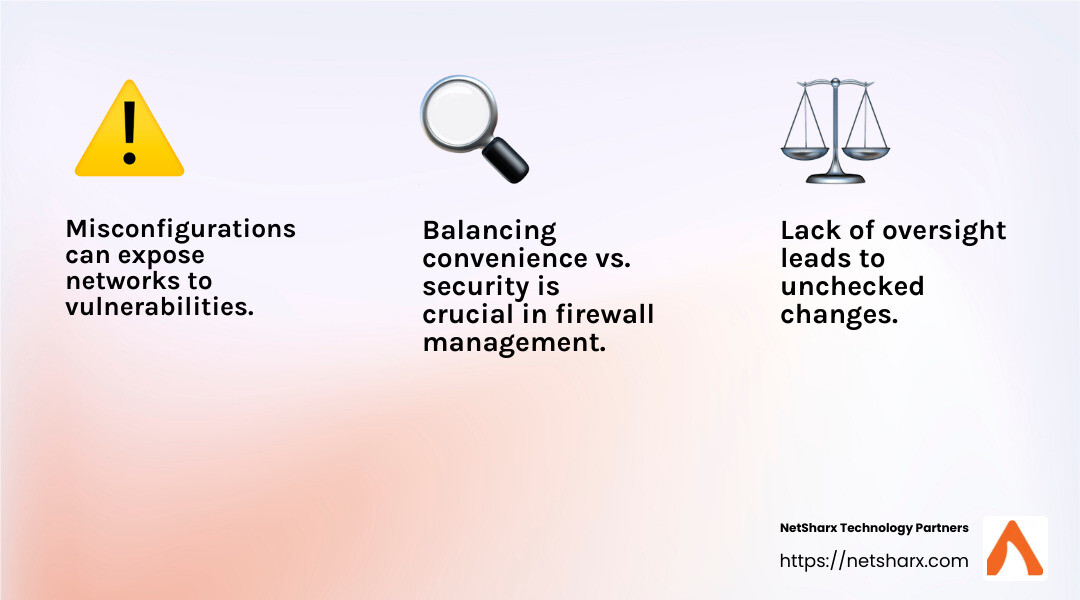
Another challenge is the lack of oversight. Without proper supervision, changes made to firewall rules might go unnoticed or unchecked. A security analyst shared an experience where a customer changed firewall rules after audits to give easier access to executives. This lack of oversight can compromise the entire security framework of a business.
Convenience vs. security is a constant battle in firewall management. While making quick changes might solve immediate problems, it often leads to long-term vulnerabilities. Therefore, it’s crucial to balance the need for convenience with the necessity of maintaining robust security measures.
Inexperience and Lack of Oversight
Inexperience in managing firewalls can exacerbate these challenges. Companies that opt to handle their own firewall management must have a thorough understanding of both the conceptual and practical aspects of firewall operation. Unfortunately, many businesses lack the in-house expertise needed for effective firewall management.
Without experienced personnel, there’s a higher likelihood of careless configurations. These can include leaving default settings unchanged or failing to update firewalls with the latest security patches. Such oversights can create entry points for cyber attackers.
To mitigate these risks, organizations should consider consulting with experienced and certified providers. A fresh set of trained eyes can often spot vulnerabilities that might otherwise go unnoticed. This collaboration not only strengthens the security posture but also ensures that firewall configurations are optimized for maximum protection.
In conclusion, the challenges of managing firewalls are significant but not impossible. By understanding the common pitfalls—such as misconfigurations and lack of oversight—and taking proactive steps to address them, organizations can maintain a strong defense against cyber threats.
Frequently Asked Questions about Managed Firewall Services
What are managed firewall services?
Managed firewall services are like having a dedicated security team looking after your network’s defenses. They involve a third-party provider managing your firewall infrastructure. This includes everything from setup and configuration to continuous monitoring and threat detection.
Why is this important? Because network security is crucial in today’s digital world. Managed firewall services ensure your network is protected 24/7 without needing in-house expertise. This means your team can focus on core business activities while experts handle security.
What is the scope of managed firewall services?
The scope of managed firewall services is comprehensive. It covers everything needed to keep your firewalls in top shape. Here’s a quick breakdown:
- Appliance Health: Regular checks to ensure firewalls are operating smoothly.
- Performance Monitoring: Keeping an eye on how well your firewalls are performing.
- Patching: Applying updates and patches to protect against new threats.
These services offer a proactive approach to maintaining network security, ensuring that your defenses are always up-to-date and effective.
What is the difference between managed and unmanaged firewalls?
The difference between managed and unmanaged firewalls boils down to oversight and support.
-
Managed Firewalls: These come with full oversight. A service provider handles everything from monitoring to support. You get 24/7 coverage and peace of mind knowing experts are keeping your network secure.
-
Unmanaged Firewalls: Here, you’re on your own. Your team must handle configuration, maintenance, and incident response. This can lead to potential security gaps, especially if your team lacks the necessary expertise.
Managed firewalls offer a safety net, ensuring that your network remains secure without the need for constant internal vigilance.
Conclusion
At NetSharx Technology Partners, we understand that every business is unique, and so are its security needs. That’s why we offer custom solutions custom to each client. Our approach is simple: provide the best possible security without bias. We are a technology broker, meaning we don’t push specific products. Instead, we focus on finding the right solution for you.
Our unbiased approach sets us apart. With access to over 330 providers, we ensure you get the best fit for your needs. Our team of agnostic solution engineers works tirelessly to match you with the right technology, whether it’s for cloud, network, or communications.
Security doesn’t have to be complicated. With our comprehensive support and competitive pricing, we make technology change straightforward. We handle the complexities, so you can focus on what matters most—growing your business.
To learn more about how we can help secure your network with managed firewall services, visit our cybersecurity page. Let’s work together to protect your digital assets with confidence.
