
Unified communications integration is changing how businesses communicate and collaborate. By seamlessly connecting voice, video, chat, and other communication tools into one platform, it simplifies interactions and boosts productivity.
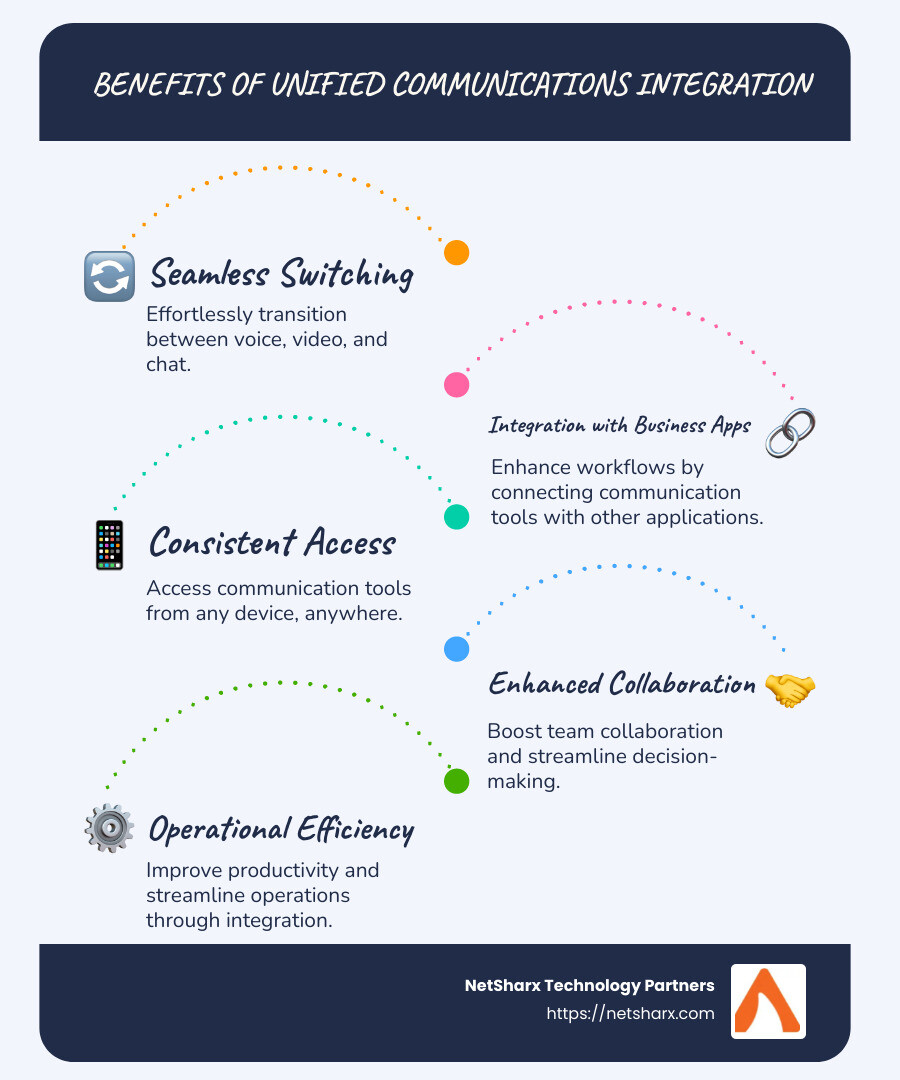
- Enables seamless switching between communication modes
- Integrates with business apps for efficient workflows
- Provides consistent access across devices and locations
- Improves team collaboration and decision-making
For businesses juggling multiple tech platforms, integrating unified communications is like finding a missing puzzle piece. It bridges gaps, consolidates tools, and meets the demands of modern business communication. Companies like NetSharx Technology Partners are using this integration to streamline operations for tech-savvy leaders who need cost-effective solutions.
Unified communications are a key part of staying connected in our digital age. As companies face challenges like digital change and cybersecurity, leveraging unified communications can make a significant impact on operational efficiency and business continuity.
Understanding Unified Communications
Unified communications (UC) is all about bringing various communication tools under one roof. Imagine having voice calling, video conferencing, instant messaging, presence, and content sharing all in one place. That’s what UC aims to achieve.
Voice Calling
Voice calling in UC allows users to make and receive calls from anywhere, using any device. It’s like having your office phone wherever you go. This flexibility is vital for businesses with remote teams or mobile workers.
Video Conferencing
Video conferencing takes face-to-face meetings to a new level. With UC, you can easily switch from a voice call to a video meeting with just a click. This feature is perfect for teams spread across different locations who need to collaborate visually.
Instant Messaging
Instant messaging is the quick and easy way to communicate in real-time. Whether you’re sending a quick update or discussing a project, IM keeps the conversation flowing without the need for lengthy emails.
Presence
Presence is about knowing who’s available and when. It shows the real-time status of colleagues—whether they’re online, busy, or away. This feature helps teams connect at the right time, reducing delays in communication.
Content Sharing
Content sharing in UC makes it simple to share files, documents, and screens during meetings or chats. It boosts collaboration by allowing everyone to see and work on the same content, no matter where they are.
Unified communications bring these tools together into a seamless experience. It’s like having a Swiss Army knife for business communication—everything you need in one handy tool. By integrating these components, businesses can improve their communication efficiency and keep everyone connected, no matter the distance.
Key Components of Unified Communications Integration
Unified communications integration is like the magic glue that brings all your communication tools together. Let’s explore the key components that make this integration work seamlessly.
Real-Time Communication
Real-time communication is the heart of unified communications. It allows for instant interaction, whether through voice, video, or instant messaging. Imagine you’re on a voice call discussing a project, and you need to show a quick demo. With real-time communication, you can switch to a video call instantly. This immediacy is crucial for businesses that need to make quick decisions and stay agile.
Seamless User Experience
A seamless user experience means everything works together smoothly. No more juggling between different apps or platforms. With unified communications, you can transition effortlessly from a chat to a call, or from a call to a video conference. This fluidity saves time and reduces frustration, allowing users to focus on what truly matters—collaboration and productivity.
APIs
APIs, or Application Programming Interfaces, are the connectors in unified communications. They allow different software systems to talk to each other. Think of APIs as bridges that connect your unified communications platform with other business tools, like CRM or project management software. This integration ensures that all your data and communication channels are in sync, leading to more efficient workflows and better decision-making.
In summary, unified communications integration is about bringing real-time communication, a seamless user experience, and powerful APIs together. This combination helps businesses communicate more effectively and efficiently, breaking down the barriers of distance and device. Whether you’re in Minneapolis or anywhere else, these components ensure that your team stays connected and productive.
Benefits of Unified Communications Integration
Integrating unified communications offers several key benefits that can transform how businesses operate. Let’s explore these benefits: improved productivity, cost reduction, and improved mobility.
Improved Productivity
Unified communications integration can turbocharge productivity. With all communication tools available in one platform, employees spend less time switching between apps. This means more time focusing on tasks that matter. Imagine a team member needing to consult a colleague during a video call. Instead of sending an email and waiting for a reply, they can instantly message or call the colleague directly within the same platform. This seamless interaction speeds up decision-making and improves teamwork.
Cost Reduction
Cost savings are another significant advantage. Traditional communication systems often require separate setups and maintenance, leading to higher expenses. Unified communications integration consolidates these tools into a single system, reducing the need for multiple licenses and hardware. Moreover, by adopting cloud-based solutions like Unified Communications as a Service (UCaaS), businesses can cut down on infrastructure costs. For example, instead of maintaining on-premises servers, companies can leverage cloud providers’ infrastructure, resulting in lower hardware and maintenance costs.
Improved Mobility
Mobility is crucial. Unified communications integration supports this by allowing employees to access communication tools from any device, anywhere. Whether on a desktop in the office or a smartphone on the go, team members can remain connected. This flexibility is particularly beneficial for remote work or businesses with multiple locations, like those in Minneapolis. With unified communications, the location becomes irrelevant, enabling employees to collaborate effectively regardless of where they are.
In conclusion, unified communications integration offers substantial benefits that improve productivity, reduce costs, and improve mobility. These advantages help businesses operate more efficiently and stay competitive in a environment.
Unified Communications Integration with Contact Centers
When it comes to contact centers, unified communications integration can be a game-changer. Imagine a contact center agent using Genesys Cloud, a leader in customer experience solutions. With this integration, agents can effortlessly connect with the right person at the right time, ensuring quick issue resolution.
Genesys Cloud and Contact Centers
Genesys Cloud is renowned for its ability to improve customer interactions. By integrating with unified communication tools, it empowers agents to access a wide range of resources without leaving their platform. This means that whether an agent needs to consult an expert or gather additional information, they can do so seamlessly. This capability is crucial for resolving customer issues quickly and efficiently.
Quick Issue Resolution
In a contact center, time is of the essence. Customers expect fast responses and accurate solutions. With unified communications integration, agents have instant access to real-time communication tools. This allows them to consult with colleagues, share files, and even bring in subject matter experts during a call.
Such seamless interaction reduces wait times and improves the customer experience. For example, if a customer calls with a complex issue, the agent can quickly message a product specialist for guidance. This real-time collaboration leads to faster problem-solving and happier customers.
Improved Customer Experience
Unified communications integration doesn’t just benefit agents; it also improves the overall customer experience. By providing agents with the tools they need to work efficiently, customers receive quicker and more accurate responses. This boosts customer satisfaction and loyalty, which are critical for any business’s success.
In summary, integrating unified communications with contact centers like Genesys Cloud significantly improves the ability to resolve issues quickly. This integration ensures that agents have the resources they need at their fingertips, leading to improved customer service and satisfaction.
Frequently Asked Questions about Unified Communications Integration
What are the main components of unified communications?
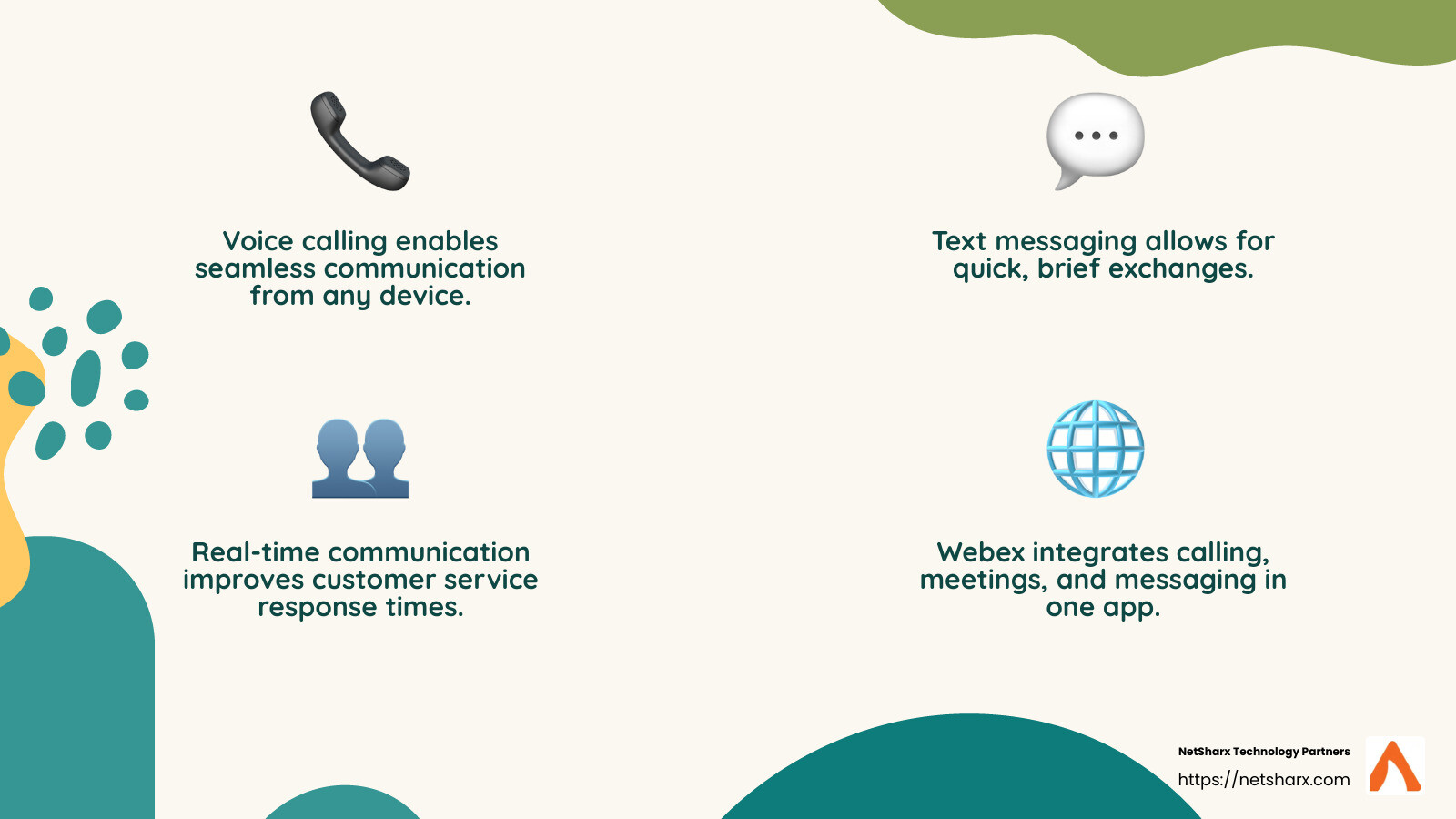
Unified communications bring together several key components to streamline how we connect and collaborate. These include voice calling, video conferencing, text messaging, and collaboration tools.
- Voice Calling: This allows users to make and receive calls from any device, ensuring seamless communication regardless of location.
- Video Conferencing: Provides face-to-face interaction, crucial for meetings and presentations, which improves understanding and engagement.
- Text Messaging: Offers quick and easy communication for brief exchanges, often used for updates or simple queries.
- Collaboration Tools: These include file sharing, whiteboarding, and other interactive features that enable teams to work together effectively.
How does unified communications integration improve customer service?
Unified communications integration improves customer service by providing agents with real-time communication capabilities. This means they can access a real-time list of available experts and resources to assist with customer inquiries.
Imagine an agent receiving a complex customer question. With unified communications, they can quickly reach out to an expert colleague for advice or additional information without leaving their platform. This faster response capability reduces wait times and increases customer satisfaction.
What is an example of unified communications integration?
A great example of unified communications integration is Webex. This platform offers seamless collaboration by bringing together calling, meetings, and messaging in one app.
Webex provides cloud solutions that enable users to connect from anywhere, on any device. This flexibility is ideal for businesses with remote teams or those looking to improve their digital communication strategies. By integrating unified communications, Webex ensures that users can collaborate effortlessly, improving productivity and efficiency.
Incorporating these components and capabilities into your business strategy can lead to more efficient operations and happier customers.
Conclusion
At NetSharx Technology Partners, we understand that every business is unique. That’s why we focus on providing custom solutions custom to meet your specific needs. Our expertise in unified communications integration ensures that you can seamlessly connect your team, no matter where they are or what devices they use.
Our approach is unbiased. We don’t push a one-size-fits-all solution. Instead, we leverage our extensive network of providers to find the best fit for your organization. This means you get a solution that’s not only effective but also cost-efficient.
By partnering with us, you gain access to a team of experts dedicated to simplifying your technology change. Our solution-agnostic engineers work closely with you to ensure that the integration of unified communications into your business strategy is smooth and successful.
Whether you’re looking to improve productivity, reduce costs, or improve mobility, NetSharx is here to help you open up the full potential of unified communications.
Ready to take the next step? Explore our custom solutions today and see how we can transform your communication strategies.
