
IT Network Consultant: 1 Expert Architect
Why Your Business Needs an IT Network Consultant in Today’s Digital-First World
An IT network consultant is a specialized professional who helps businesses design, implement, and optimize their network infrastructure to ensure security, efficiency, and scalability.
Key benefits of hiring an IT network consultant:
- Expert Strategic Planning – Aligns network infrastructure with business objectives
- Cost Optimization – Reduces network expenses by 30% or more through efficient design
- Improved Security – Implements robust cybersecurity measures and compliance frameworks
- Scalability Planning – Designs networks that grow with your business needs
- Vendor-Agnostic Approach – Provides unbiased recommendations across 350+ technology providers
- Specialized Expertise – Brings experience from multiple industries and complex implementations
- Risk Mitigation – Identifies vulnerabilities before they become costly problems
Modern IT environments are incredibly complex. Businesses now rely on interconnected systems spanning cloud platforms, remote workforces, and IoT devices—all while facing increasing cybersecurity threats. This complexity presents a strategic challenge: how do you align network investments with business goals under tight budgets?
This is where an IT network consultant becomes invaluable. Unlike internal IT staff focused on daily operations, consultants bring a “bird’s-eye view” to solve complex infrastructure challenges. They handle the “upstream” strategic planning, allowing your team to focus on “downstream” maintenance.
As an IT network consultant and founder of NetSharx Technology Partners, I’ve helped organizations achieve digital change by consolidating tech stacks and reducing costs by 30% or more through cloud migrations, network security, and strategic partnerships.
Learn more about it network consultant:
- enterprise unified communications solutions
- it cyber security consultant
- it implementation consultant
What is an IT Network Consultant? The Architect of Your Digital Backbone
An IT network consultant is more than just a problem-fixer; they are the architect of your company’s digital backbone. Their primary role is to understand your unique business needs and craft a network solution that is not only effective today but also resilient and scalable for the future. As expert advisors and strategic partners, we bring a wealth of knowledge from diverse industries, enabling us to provide custom solutions that address both technical challenges and business objectives.
The Primary Role: Beyond Just Fixing Problems
The true value of an IT network consultant lies in a strategic, proactive approach that extends far beyond simple troubleshooting. Our responsibilities include:
- Strategic Planning: Analyzing your existing network to identify strengths, weaknesses, and bottlenecks.
- Infrastructure Design: Designing new network architectures or improving existing ones to optimize efficiency, reduce costs, and improve performance.
- Performance Optimization: Continuously monitoring network performance and security to suggest and implement improvements.
- Security Fortification: Pinpointing security risks and outlining defense strategies to protect against cyber threats and ensure compliance.
- Future-Proofing Technology: Staying updated with industry trends to recommend and deploy the latest hardware, software, and network changes.
- Business Objective Alignment: Ensuring your network infrastructure and technology investments directly support your strategic business goals.
How Consultants Differ from Internal IT Teams
While internal IT teams are invaluable for day-to-day operations, an external IT network consultant provides a distinct, specialized perspective. Here’s how we differ:
- Specialized Expertise: We are experts in a wide variety of network systems, including LAN, WAN, WLAN, SAN, and VoIP. This broad exposure allows us to solve complex problems that internal teams may not have encountered.
- Broader Industry Knowledge: Working with various clients gives us a unique perspective on cutting-edge solutions and best practices from across different industries.
- Cost-Effectiveness for Specific Projects: Hiring a consultant for complex projects like a major technology transition is often more cost-effective than hiring or training full-time staff.
- Unbiased Vendor Recommendations: As technology brokers, our recommendations are vendor-agnostic and based solely on what’s best for your business. We help you steer technology providers to find the right solution, not just the one with the best sales pitch.
- Focus on “Upstream” Strategy: We concentrate on the “upstream” phase of strategic planning and risk identification, allowing your internal team to focus on critical “downstream” maintenance and daily operations.
We act as an extension of your team, providing the specialized knowledge needed to lift your network infrastructure. For more info about our comprehensive solutions, we encourage you to check out our solutions.
Core Services and Responsibilities: What a Network Consultant Does for Your Business
Partnering with an IT network consultant transforms your technology from a daily headache into a competitive advantage. We ensure your company’s digital nervous system is healthy, efficient, and ready to support your business goals. Our approach is always customized, as we align your network infrastructure with business objectives to optimize costs, increase productivity, and mitigate risks. This can reduce technology expenses by 30% or more while improving performance. For more info, visit our solutions page.
Key Services Offered
The work of an IT network consultant spans the entire lifecycle of your network infrastructure, from initial assessment to ongoing optimization.
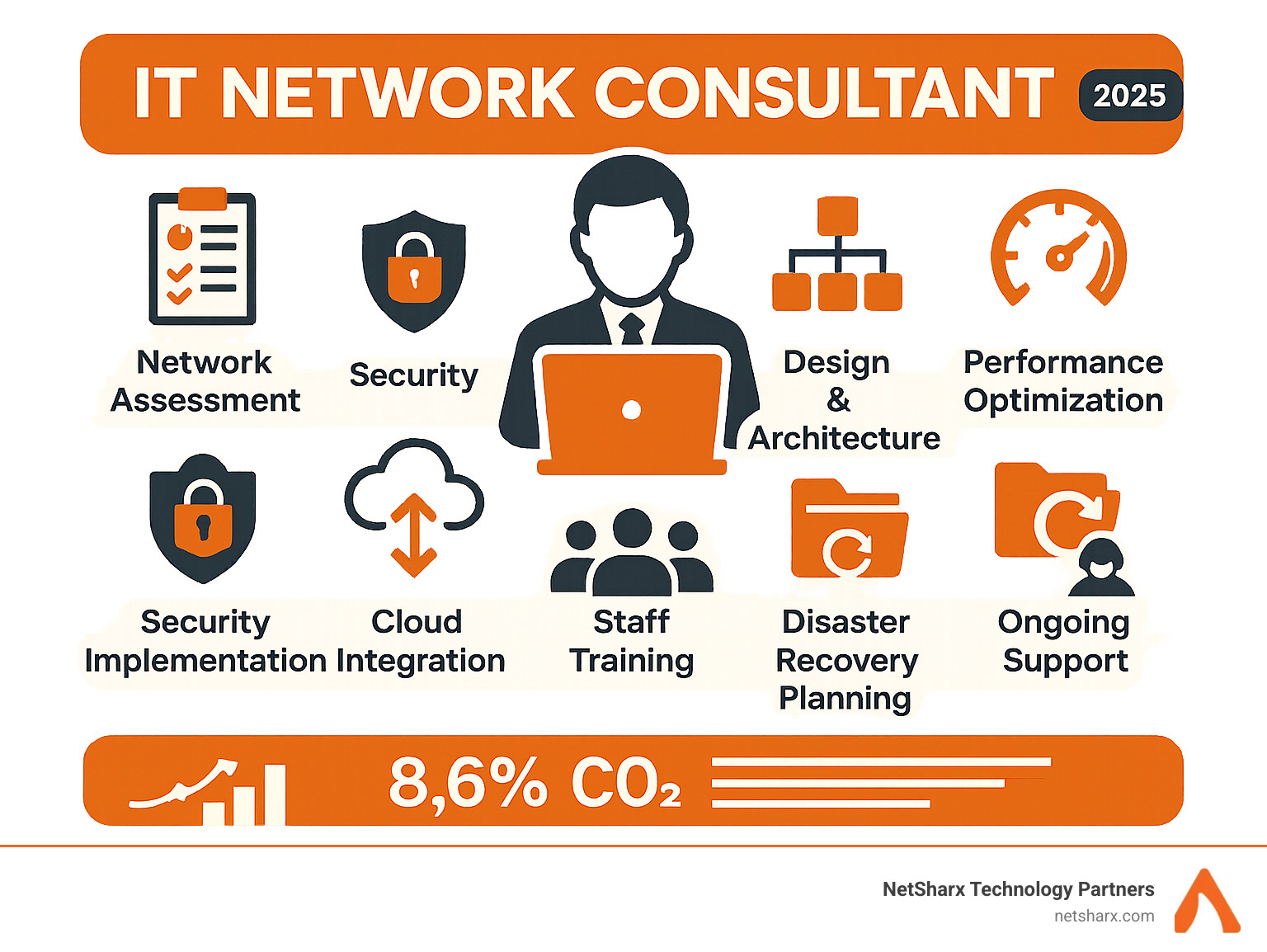
- Network Assessment & Auditing: We conduct a thorough examination of your current systems. This deep-dive process involves creating a performance baseline, mapping the logical and physical network topology, analyzing traffic patterns to identify bottlenecks, reviewing hardware lifecycle status, and performing comprehensive vulnerability scans. The final deliverable is not just a list of problems but a strategic roadmap with prioritized, actionable recommendations to improve performance, security, and scalability.
- Network Design & Architecture: Based on the assessment, we create a blueprint for your ideal network, planning for server availability, disaster recovery, and scalability using various network types (WAN, LAN, WLAN, etc.). This design phase ensures that every component of the infrastructure is aligned with both current operational needs and future growth projections.
- Implementation & Deployment: We manage the installation and configuration of new hardware and software. Our role extends to full project management, including procurement, logistics, and phased rollout schedules designed to minimize operational impact. We create detailed migration plans, conduct pre-deployment testing in a staging environment, and manage the cutover process carefully, often during off-peak hours, to ensure a seamless transition with predictable outcomes.
- Security & Compliance: We conduct security assessments, deploy firewalls, and manage IT policies. This involves implementing a defense-in-depth security strategy that goes beyond just firewalls. We assess your posture against frameworks like NIST and CIS, deploy advanced threat detection systems, and establish robust access control policies. For businesses in regulated industries, we provide critical guidance on achieving and maintaining compliance with standards such as HIPAA, PCI DSS, GDPR, and SOX, translating complex legal requirements into concrete technical controls.
- Performance Monitoring & Optimization: We continuously monitor network performance, proactively resolving issues before they impact your business and implementing the latest technologies to maintain peak efficiency. This includes setting up advanced monitoring tools that provide real-time alerts and historical performance data, allowing for trend analysis and proactive capacity planning.
- Disaster Recovery & Business Continuity Planning: We develop and implement comprehensive data backup, archiving, and disaster recovery plans. This is more than just data backup; it’s about ensuring organizational resilience. We work with stakeholders to define critical business functions and establish key metrics like Recovery Time Objectives (RTOs)—how quickly you need to be back online—and Recovery Point Objectives (RPOs)—how much data you can afford to lose. We then design a holistic strategy that encompasses not just IT disaster recovery but broader business continuity, ensuring your entire operation can withstand and recover from disruptions.
- Cloud Network Integration: We provide expert guidance for integrating cloud-based networking solutions, ensuring seamless connectivity and optimized performance. You can harness the power of cloud change with our expertise.
- Staff Training & Documentation: We train your staff on new technologies and create comprehensive documentation and standard operating procedures for clarity and consistency. This knowledge transfer empowers your internal team to manage the new systems effectively, reducing long-term reliance on external support for day-to-day operations.
Driving Business Value and Achieving Objectives
The Technology Toolkit: Networks, Systems, and Specializations
An IT network consultant approaches technology with deep expertise across a comprehensive toolkit. As technology professionals, our vendor-agnostic approach means we focus on implementing the best technology for your unique needs. We constantly evaluate new advancements to ensure your network is future-ready, helping you harness the power of cloud change and ensuring your infrastructure supports your strategy.
Types of Network Technologies and Systems
Our role as an IT network consultant is to design a cohesive system using various network technologies that meet your operational demands.
- Local Area Network (LAN): Connects devices within a limited area like an office.
- Wide Area Network (WAN): Connects multiple LANs over large distances, crucial for businesses with multiple branches. This includes Software-Defined Wide Area Network (SD-WAN) for optimizing traffic routing.
- Wireless Local Area Network (WLAN): Provides the wireless connectivity that modern workplaces depend on for flexibility and mobility.
- Cloud Networks: Requires specialized expertise to design and manage networks that integrate with platforms like AWS, Azure, and Google Cloud.
- Data Center Networks: Specialized networks designed for high-speed, high-volume traffic within data centers.
- Voice over IP (VoIP): Enables cost-effective voice communication over internet protocols, integrating it with your data network.
- Virtual Private Networks (VPNs): Creates secure, encrypted connections over public networks, essential for secure remote access.
We help clients explore our network connectivity services, ensuring they have the right infrastructure to support their operations.
Common Hardware and Software
Building and managing networks requires a combination of hardware and software components:
- Routers & Switches: Direct data traffic between networks and connect devices within a single network.
- Firewalls: Act as security guards, monitoring and filtering traffic to protect against unauthorized access.
- Access Points: Enable wireless devices to connect to a wired network.
- Network Monitoring Tools: Provide real-time visibility into network performance to identify and resolve issues proactively.
- Virtualization Platforms (VMware, Hyper-V): Optimize resource utilization by running multiple virtual machines on a single physical server.
- Security Information and Event Management (SIEM): Centralize security data to help detect and respond to threats quickly.
- Infrastructure as Code (IaC) tools: Automate the provisioning and management of infrastructure for consistency and efficiency.
Areas of Specialization
Many consultants develop specialized expertise to offer more sophisticated solutions for complex challenges.
- Network Security: Focuses on protecting network infrastructure from cyber threats. We help fortify your business with advanced cybersecurity solutions.
- Cloud Networking: Involves designing and managing network connectivity within and between cloud environments.
- Data Center Architecture: Experts design and optimize the complex, high-performance networks that power modern data centers.
- Wireless Solutions: Specialists design and deploy high-performance, secure wireless networks.
- Unified Communications: Integrates voice, video, messaging, and collaboration tools over a single network infrastructure.
An experienced IT network consultant understands how these specializations work together to create integrated systems that support your business objectives.
Building a Career as an IT Network Consultant
Building a career as an IT network consultant is a dynamic journey that rewards continuous learning and the ability to translate technical jargon into business solutions. The demand for skilled professionals who can design, implement, and optimize network infrastructure is strong and growing, according to the Bureau of Labor Statistics (BLS).
Essential Skills: The Technical and Soft Skill Matrix
A successful IT network consultant must balance technical expertise with strong soft skills to bridge the gap between technology and business needs.
- Technical Skills: A deep understanding of network routing, switches, cybersecurity principles, and cloud computing is essential. Proficiency with core protocols like TCP/IP, BGP, and OSPF is also critical.
- Soft Skills: Excellent communication, troubleshooting, and customer service skills are paramount. The ability to explain complex concepts to non-technical stakeholders, solve problems systematically, and manage client expectations is what separates good consultants from great ones. Strong analytical thinking and business acumen are also key.
Education and Certifications: Your Path to Becoming an IT Network Consultant
While a bachelor’s degree in a field like computer science or IT provides a strong foundation, professional certifications are crucial for demonstrating credibility and up-to-date knowledge.
Key certifications to look for in a consultant include:
- CompTIA Network+: A solid foundation in vendor-neutral networking concepts.
- Cisco (CCNA, CCNP, CCIE): The industry gold standard, reflecting increasing levels of expertise.
- Juniper (JNCIE-ENT): Important for environments using Juniper equipment.
- AWS Certified Cloud Practitioner: Demonstrates competency in cloud networking.
- Certified Information Systems Security Professional (CISSP): A highly respected credential for security-focused roles.
Career Path, Industries, and Salary Outlook for an IT Network Consultant

The career path for an IT network consultant typically progresses from hands-on technical roles like Network Technician to Network Engineer, and then to more strategic Senior Consultant and Network Architect positions. Demand for these skills is high across many industries, including technology services, telecommunications, education, and healthcare.
Salary expectations vary widely based on experience, location, and specialization. Payscale data shows a wide range from $43,425 to $200,302 per year. Earning potential is significantly influenced by advanced certifications (like CCIE or CISSP) and specialization in high-demand areas like cloud networking or cybersecurity.
Frequently Asked Questions about IT Network Consulting
Here are straight answers to some of the most common questions businesses have when considering hiring an IT network consultant.
How much does it cost to hire an IT network consultant?
The cost varies, but most consultants use one of three pricing models:
- Hourly Rates: You pay for the time spent on your project. Rates depend on experience, specialization, and location (e.g., rates in Minneapolis may differ from other markets).
- Project-Based Fees: A fixed price for a defined scope of work, like a network assessment or security audit. This provides cost predictability.
- Retainer Agreements: A recurring monthly or quarterly fee for continuous access to expert support.
Final costs are influenced by the project’s scope and duration, as well as the level of expertise required. Highly specialized consultants command premium rates but can save you money by preventing costly errors.
When should my business hire a network consultant instead of a full-time employee?
While full-time staff are essential for daily operations, an IT network consultant is often the better choice for:
- Specific, complex projects: Such as cloud migrations or major security overhauls where expert skills are needed temporarily.
- Filling specialized expertise gaps: When your internal team lacks knowledge in areas like advanced security or data center architecture.
- Unbiased third-party assessments: To get an objective perspective on your network’s inefficiencies and opportunities.
- Major technology upgrades: To ensure a smooth transition with minimal business disruption, guided by an expert who has managed similar projects.
- Budget constraints: When hiring a consultant for a specific initiative is more cost-effective than the salary and overhead of a full-time senior employee.
Can a network consultant work remotely?
Yes, absolutely. Modern technology makes remote network consulting highly effective. Many core services, including network monitoring, troubleshooting, and configuration, can be performed securely from anywhere using remote access tools and cloud-based management platforms.
However, some tasks like initial hardware installation or in-depth physical assessments may require an on-site presence. We often use a hybrid model, combining remote work for efficiency with on-site visits for critical tasks. This flexibility allows you to access top-tier IT network consultant expertise regardless of your geographic location.
Conclusion: Partnering for a Future-Proof Network
We’ve explored the essential world of the IT network consultant, from their strategic role to the comprehensive services they provide. These specialists bring a crucial external perspective and specialized expertise that can transform your network into a powerful business asset.
Modern IT environments are incredibly complex, juggling cloud platforms, remote workforces, and constant cybersecurity threats. This is a business challenge that requires strategic thinking. An IT network consultant provides a “bird’s-eye view,” helping you reduce costs, improve security, and ensure your network can scale with your business. They are your trusted guide through the maze of modern technology.
The value is clear: expert guidance that aligns technology with your business objectives, vendor-agnostic recommendations, and the knowledge to future-proof your infrastructure. Having the right consultant makes all the difference.
For businesses seeking a trusted technology broker, NetSharx Technology Partners offers an agnostic approach to engineer the perfect solution across cloud, network, and security. We simplify technology change with competitive pricing and comprehensive support.
The question isn’t whether you need expert network guidance—it’s whether you can afford to steer today’s complex IT landscape without it. Your network is your business’s backbone; ensuring it’s robust, secure, and scalable is critical to your future success.
Ready to transform your network infrastructure? Contact us to transform your datacenter and network infrastructure today, and let’s build a network that truly works for you.
