
Cloud Migration Project Management: 7 Powerful Success Steps 2025
Why Cloud Migration Project Management Makes or Breaks Your Digital Change
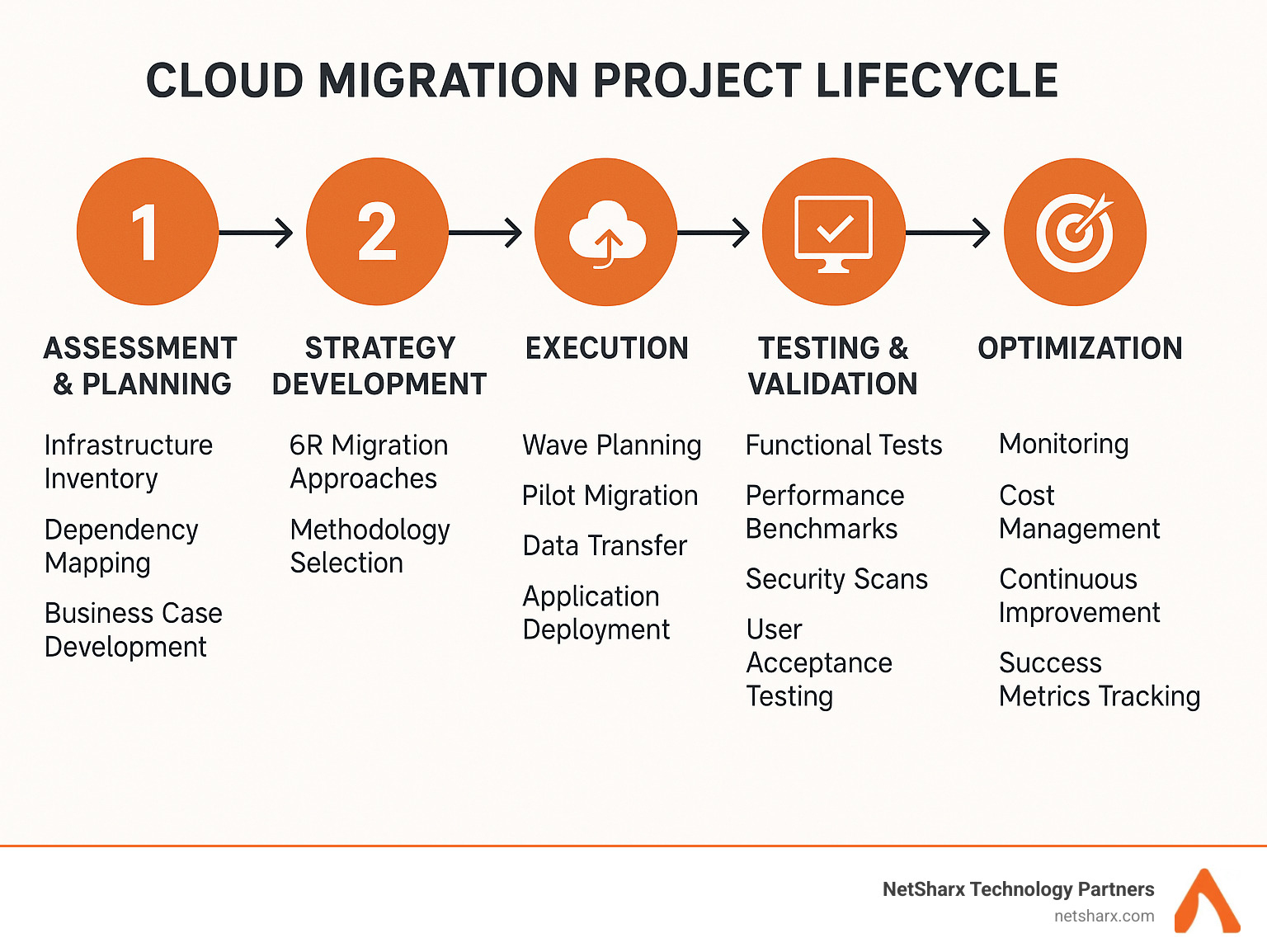
Cloud migration project management is the structured approach to planning, executing, and optimizing the move from on-premises infrastructure to cloud environments. Here’s what you need to know:
Key Components:
– Assessment & Planning – Inventory current systems and define migration strategy
– Team Structure – Migration architect, cloud engineers, security leads, data owners
– Methodology Selection – Choose between waterfall, agile, or hybrid approaches
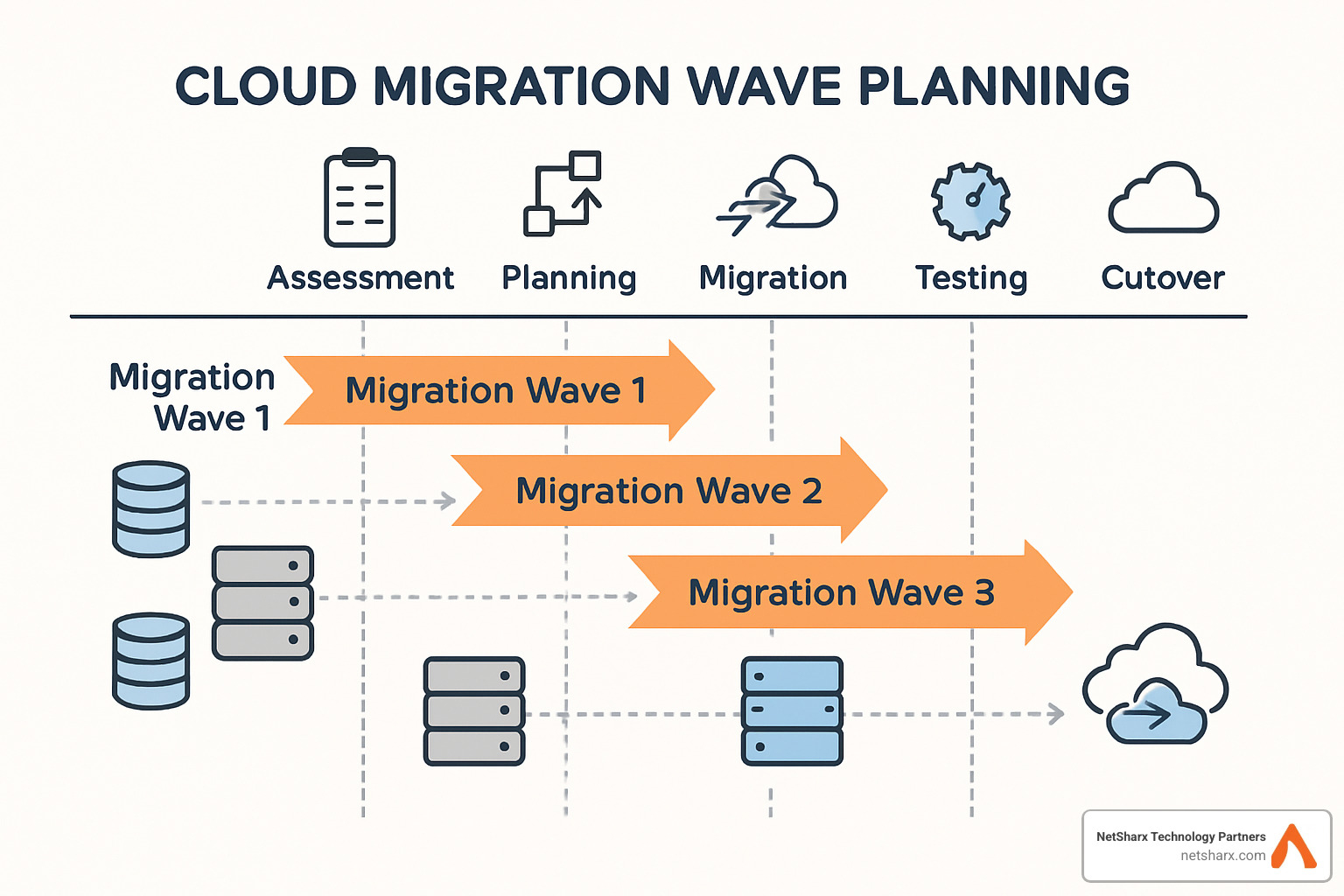
– Execution Phases – Findy, foundation design, wave planning, and cutover
– Risk Management – Dependency mapping, change control, and rollback planning
– Success Metrics – KPIs, cost optimization, and continuous improvement
The stakes couldn’t be higher. Research shows that over 70% of digital changes fail due to poor governance and cross-functional misalignment. Meanwhile, organizations that get it right see dramatic results – some reduce infrastructure costs by 35% while cutting development cycles from 6-8 weeks to just 1-2 weeks.
But here’s the challenge: 75% of companies pay more than budgeted for cloud migration because they underestimate the complexity. Legacy applications, data dependencies, security requirements, and stakeholder alignment create a web of interconnected decisions that can derail even well-intentioned projects.
The good news? With the right project management framework, cloud migration becomes predictable and manageable. You just need to understand the phases, build the right team, and follow proven methodologies that account for both technical and organizational change.
I’m Ryan Carter, founder and CEO of NetSharx Technology Partners, where we’ve helped organizations migrate from legacy to cloud in weeks instead of months through structured project management approaches.
Cloud migration project management terms to know:
– cloud migration best practices
– digital change and sustainability
– digital change consulting
Why Modern Organizations Migrate (and What Can Go Wrong)
The rush to cloud isn’t just about staying trendy – it’s about surviving in a world where digital-first companies are eating everyone’s lunch. Organizations are finding that cloud computing delivers better performance, stronger security, infinite scalability, and the agility to pivot faster than ever.
By 2026, public cloud spending will gobble up over 45% of all enterprise IT budgets according to Gartner. Meanwhile, more than 80% of companies are using multi-cloud strategies because different workloads have different needs.
The business case for migration usually boils down to three big wins:
Cost optimization can slash ongoing operations costs by 30-50%. Instead of buying expensive hardware that depreciates, organizations shift to paying only for what they use.
Agility and speed transform how fast you can move. Cloud services can be provisioned in minutes instead of months, cutting startup time by approximately 50% compared to traditional infrastructure.
Performance and reliability get a major boost through workload placement optimization, which can save 10-30% on cloud spend while improving performance.
But here’s the reality check: despite these compelling benefits, real-world cloud migration project management reveals sobering challenges.
Key Benefits vs. Challenges
On the bright side, organizations that get it right enjoy scalability that grows with demand, performance boosts from global networks, enterprise-grade security managed by cloud providers, built-in compliance frameworks, and access to AI/ML services.
But reality hits hard. Skill gaps plague 42% of organizations. Legacy sprawl trips up 43% of companies. Security concerns worry 65% of decision-makers. Complexity of organizational change stymies 55% of migrations. And three-fourths of companies pay more than budgeted.
Latest research on digital change confirms what we’ve seen: successful migrations require tackling both technical and people challenges simultaneously.
Creating a Solid Business Case
A rock-solid business case is your foundation. Without clear justification and stakeholder buy-in, even brilliant technical plans will struggle.
Total Cost of Ownership (TCO) analysis starts with honest math about your current setup. Add up hardware, software licenses, maintenance, power, cooling, and staff time. Then model cloud costs including compute, storage, networking, and management tools. Don’t forget migration expenses, training time, and productivity dips.
Return on Investment (ROI) calculations should look beyond simple cost comparisons. Factor in productivity gains from faster provisioning, reduced downtime, improved disaster recovery, and better security. One client calculated $600K in annual net benefits after migration.
Workload placement strategy recognizes that not every application belongs in the same place. Consider data sensitivity, performance requirements, compliance needs, and cost optimization.
Stakeholder alignment means speaking everyone’s language. Frame benefits in terms each group cares about most, and you’ll get the support you need to succeed.
Building Your Cloud Migration Project Management Strategy
Cloud migration project management has no magic formula that works for every organization. What works for a startup might crash at a regulated financial institution. The key is understanding your options and matching them to your reality.
Research from PMI shows that 60% of companies leverage a hybrid approach to project management for cloud initiatives. This isn’t indecision – it’s because cloud migrations often need both structured planning and flexible execution.
Choosing the Right Migration Approach (6 Rs)
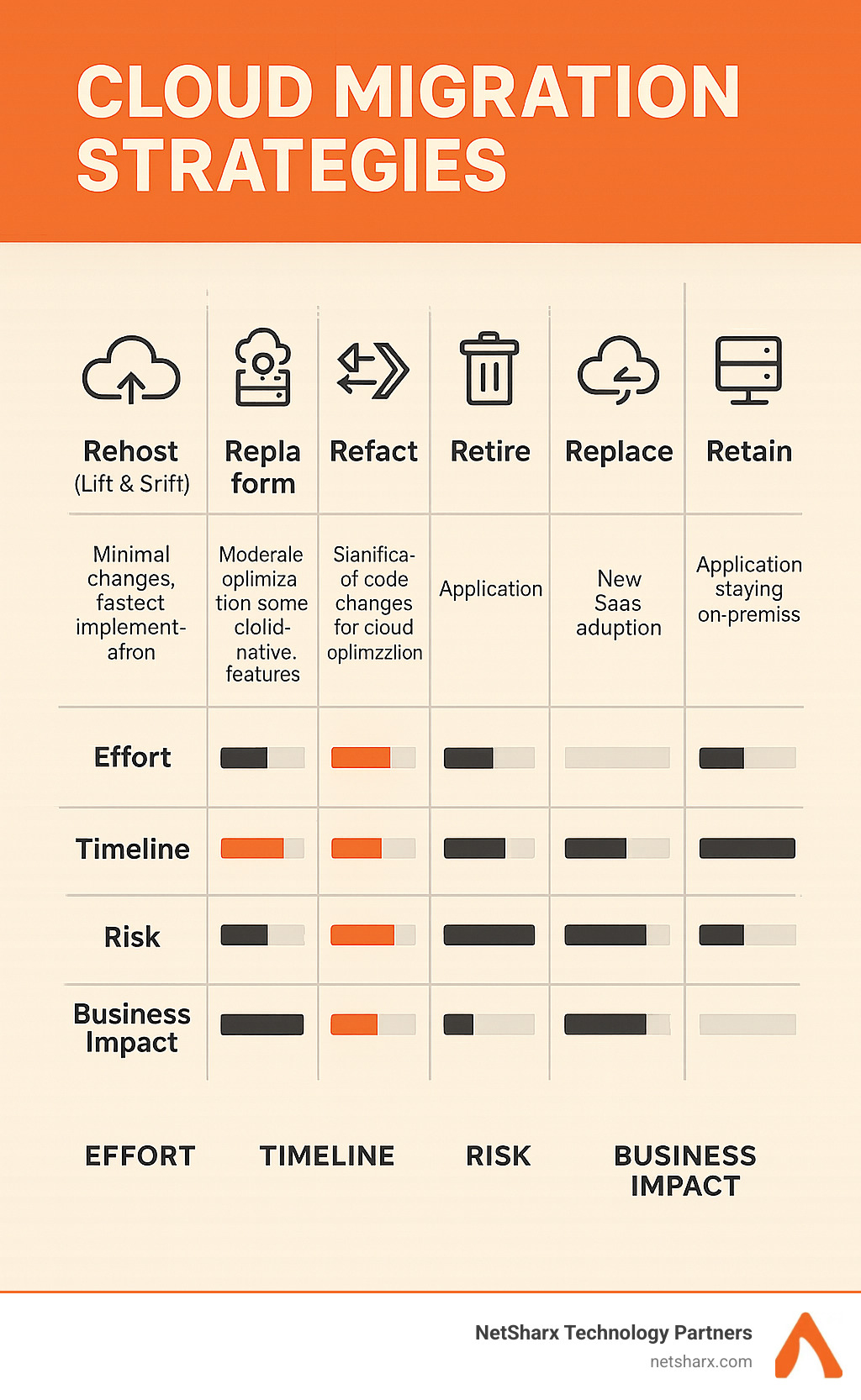
The “6 Rs” framework is a practical way to think through what to do with each application instead of treating everything the same way.
Rehost is your “lift and shift” approach – moving applications to cloud with minimal changes. Low effort, quick results in weeks to months, manageable risk. The downside? You’re not getting full cloud benefits.
Replatform makes small optimizations without changing core architecture. Maybe swap your database for a managed cloud service. It’s a sweet spot – more effort than rehosting, but better cloud benefits without full redesign complexity.
Refactor redesigns applications to be truly cloud-native. Takes 6-18 months but delivers maximum cloud benefits. Worth it for core business applications.
Retire decommissions applications nobody uses. Often the biggest win – quick, saves money, simplifies your environment.
Replace finds SaaS alternatives instead of migrating existing applications. Moderate effort with data migration needs, but eliminates maintenance headaches.
Retain keeps some applications on-premises due to regulatory constraints, performance requirements, or recent investments.
| Migration Approach | Effort Level | Timeline | Cloud Benefits | Technical Risk |
|---|---|---|---|---|
| Rehost | Low-Medium | Weeks-Months | Limited | Low |
| Replatform | Medium | Months | Moderate | Medium |
| Refactor | High | 6-18 Months | Maximum | High |
| Retire | Low | Weeks | Cost savings | Low |
| Replace | Medium | Varies | High | Medium |
| Retain | None | N/A | None | Low |
Selecting a Project Methodology
Waterfall still makes sense for highly regulated industries needing extensive documentation or monolithic applications requiring sequential changes. Provides structure and predictable timelines but less flexibility.
Agile works when you have microservices that can be migrated independently and experienced cloud teams. Faster feedback and continuous improvement, but less predictable timelines.
Most successful migrations use a hybrid approach. Do strategy, architecture, and governance planning using waterfall principles. Execute actual migration work using agile methods – short sprints, regular feedback, course corrections.
Defining Roles & Skills
Your Migration Architect has end-to-end technical accountability. They design target architecture, make critical decisions, and resolve integration issues. Need 5+ years cloud architecture experience.
Cloud Engineers are hands-on implementers writing infrastructure as code, configuring security, handling data migration. Must have platform-specific experience and automation skills.
Security Lead ensures no security holes during migration. Must understand both traditional and cloud security models.
Data Owner handles data classification, migration integrity, and regulatory compliance. Bridges technical implementation and business requirements.
Change Manager handles the people side – training programs, stakeholder communication, helping business units adapt. Often underestimated but crucial for long-term success.
Execution Phases: From Readiness to Cutover
This is where your cloud migration project management strategy shifts from planning to doing, and every decision gets tested against reality. The execution phase can make or break your migration.
Assess & Prioritize Workloads
Findy and assessment forms the foundation of everything that follows. This phase typically consumes 20-25% of your migration timeline but prevents up to 80% of problems later.
Start with comprehensive findy using automated tools to catalog applications and dependencies, data volumes and classifications, infrastructure components and utilization, plus network connectivity and security requirements. Capture performance baselines – you’ll need these for validation.
Dependency mapping is where many organizations stumble. Applications rarely exist in isolation. Create detailed dependency maps showing interconnections. This becomes critical for wave planning because you can’t migrate an application before its dependencies are ready.
Cloud readiness assessment evaluates each workload: Does the application support cloud infrastructure? Can cloud meet current SLAs? Are security controls available? Will deployment be cost-effective?
Capacity sizing translates current compute, memory, storage, and I/O requirements into cloud equivalents. Factor in cloud-specific opportunities like auto-scaling and managed services.
Develop a risk matrix considering technical complexity, business impact, and migration approach. This helps prioritize workloads and plan risk mitigation.
Data & Application Migration Tactics
Change Data Capture (CDC) replication enables near-real-time synchronization between source and target systems. Minimizes downtime by keeping systems in sync during migration. Ideal for large databases with strict uptime requirements.
Snapshot-based migration creates point-in-time copies. Works well for smaller datasets or when brief downtime is acceptable. Simpler to implement but requires downtime for final synchronization.
Blue-green deployment maintains parallel environments during migration, allowing instant traffic switching with rollback capability. Requires duplicate infrastructure but provides maximum safety.
Canary deployment gradually shifts traffic from old to new environment. Allows real-world validation with limited risk exposure.
Downtime window approach schedules maintenance windows for complete cutover. Simplest approach but requires business acceptance of downtime.
Scientific research on data transfer shows that migration approach choice significantly impacts both timeline and success rates.
Testing, Validation & Cutover
Testing prevents your migration from becoming a disaster story. Plan multiple testing phases with specific objectives and success criteria.
Functional testing verifies all application features work correctly in cloud. Test integrations, validate user workflows, include edge cases. Don’t assume on-premises behavior translates directly.
Performance testing compares cloud performance against baselines. Test under expected and peak load conditions. Validate auto-scaling features. Cloud performance characteristics differ from on-premises systems.
Security testing verifies proper security control implementation. Test identity and access management, validate encryption, conduct vulnerability scans.
User acceptance testing involves business users validating real-world scenarios. Users often catch issues technical testing misses.
Cutover planning requires detailed procedures including step-by-step technical procedures, stakeholder communication plans, go/no-go decision criteria, comprehensive rollback procedures, and post-cutover validation checklists.
When everything goes according to plan, successful cutover is a testament to thorough cloud migration project management rather than luck.
Governance, Security & Continuous Optimization
You’ve moved to cloud, but now comes the real challenge: keeping everything secure, compliant, and cost-effective while continuously improving. Without proper governance, even successful migrations can spiral into costly, insecure messes.
Zero-trust security should be your foundation. Verify everything and everyone, every time. This means authentication at every access point, network segmentation by default, and continuous monitoring.
Identity and Access Management (IAM) needs role-based access control mirroring business functions. Multi-factor authentication is essential for administrative access. Regular access reviews catch forgotten accounts that become security risks.
Compliance management gets tricky with regulations like GDPR having strict data residency requirements. Map compliance requirements to cloud controls early and build audit trails into everything.
Cost management and FinOps practices separate successful adopters from those with sticker shock. Smart tagging strategies track costs by department or project. Budget alerts catch runaway spending. Reserved instances and savings plans cut costs by 30-70%.
Automation and Infrastructure as Code maintain consistency as you scale. When everything is defined in code, you can reproduce environments exactly and recover from disasters quickly.
Risk, Change & Dependency Management
Managing risk becomes more important as your cloud environment grows. Keep a comprehensive risk register covering technical, business, and financial risks.
Change control process needs to balance agility with stability. Implement structured change management with clear approval workflows, but don’t make it so heavy that it slows innovation.
Dependency management becomes more complex because everything is interconnected. Application, infrastructure, and business process dependencies all need tracking. One small change can have ripple effects.
Communication and training never end. Teams need ongoing education as cloud services evolve. Build feedback mechanisms for continuous improvement.
Post-Migration Success Metrics
How do you know if migration was successful? You need concrete metrics proving business value.
Technical metrics show if systems perform as expected: application response times, system availability, security incident rates. Resource utilization metrics help optimize costs by rightsizing instances.
Business metrics connect technology to business outcomes: cost per transaction, time to market, user satisfaction scores, business continuity capabilities.
Financial metrics are where many struggle. Track actual versus budgeted costs ruthlessly. Calculate real ROI including direct savings and productivity gains.
Create an optimization loop that never stops improving. Regular performance reviews identify opportunities. Cost analysis reveals rightsizing possibilities. Security assessments catch emerging threats.
Treat optimization as an ongoing process, not a one-time event. The cloud constantly evolves, and your governance practices must evolve with it.
For comprehensive strategies that help maximize your cloud investment over time, explore our solutions designed to support your ongoing optimization journey.
Frequently Asked Questions about Cloud Migration Project Management
Let’s tackle the questions we hear most often from organizations planning their cloud journey. These come from real conversations with CTOs, IT directors, and project managers who want to get their cloud migration project management right the first time.
What’s the typical timeline for a migration project?
Here’s the honest answer: it depends on what you’re moving and how complex your environment is. But I can give you realistic expectations based on what we see in the field.
Small-scale migrations typically take 2-3 months when you’re dealing with a handful of applications (maybe 5-10) that can be lifted and shifted without major changes. Think straightforward web applications or simple databases that don’t have complex dependencies. These projects work well when you’re testing the waters or proving value to stakeholders.
Medium-scale migrations usually run 3-6 months and involve 10-50 applications with mixed complexity. You might be doing some lift-and-shift work alongside platform optimization. These projects often require multiple migration waves and careful dependency management. This is where most mid-market companies find themselves.
Large enterprise migrations stretch 6-12 months and involve extensive application portfolios with complex integrations. You’re likely modernizing applications, dealing with legacy systems, and coordinating across multiple business units. These projects require significant change management and often span multiple cloud providers.
Enterprise-wide changes can take 12-24 months when you’re overhauling your entire infrastructure and organizational processes. This includes comprehensive security frameworks, extensive training programs, and fundamental changes to how your organization operates.
The secret sauce? Spend 20-25% of your timeline on pre-migration assessment. It feels like you’re moving slowly, but this upfront work prevents up to 80% of the issues that derail projects later. Trust me on this one – rushing the planning phase is where most budget overruns start.
How do we avoid budget overruns?
Budget control is where cloud migration project management gets real. Three-fourths of companies pay more than they budgeted, but it doesn’t have to be that way.
Start with realistic cost planning that includes everything. Direct costs like compute, storage, and networking are obvious. But don’t forget indirect costs like training your team, running parallel environments during testing, and the staff time for project management. Add a 15-25% contingency – you’ll probably need it.
Reserved instances and savings plans can cut your costs by 20-50% for predictable workloads. Yes, you’re making commitments, but the savings are substantial. For development and testing environments, implement automated shutdown schedules – we’ve seen organizations save 30-70% just by turning off resources when they’re not needed.
Continuous cost monitoring is non-negotiable. Set up budget alerts, review spending weekly (not monthly), and clean up unused resources religiously. One client finded they were spending $3,000 monthly on storage snapshots they’d forgotten about. Small leaks sink ships.
The key is treating cost management as an ongoing practice, not a one-time setup. FinOps practices help you optimize continuously rather than getting surprised by your monthly bill.
Which PM methodology works best for regulated industries?
Regulated industries face a unique challenge: they need the structure and documentation that compliance requires, but they also want the efficiency that modern project management delivers.
Hybrid approaches work best because they give you the best of both worlds. Use waterfall elements for compliance – comprehensive documentation, structured phase gates, and formal approval processes that auditors love. But use agile elements for efficiency – iterative testing, continuous feedback, and rapid issue resolution that keeps projects moving.
The governance framework is everything in regulated environments. You need clear roles and responsibilities, change control processes, and compliance monitoring that happens throughout the project, not just at the end. Documentation requirements include architecture decisions, security control implementation, and data handling procedures that satisfy regulatory requirements.
Many regulated organizations start with waterfall planning phases to establish their governance framework and compliance procedures. Once that foundation is solid, they transition to agile execution phases for the actual migration work. This gives them the structure they need for compliance while maintaining project momentum.
The trick is balancing compliance requirements with project efficiency. You can satisfy regulators without grinding your project to a halt – it just requires the right framework and experienced guidance.
Conclusion
Your cloud migration project management journey doesn’t end when the last server moves to the cloud. That’s when real value creation begins. Organizations that thrive treat migration as the foundation for ongoing digital innovation.
We’ve covered the essential elements that separate successful migrations from expensive learning experiences: solid business case, right migration approach for each workload, skilled team, and proper governance. But having an experienced partner makes the difference.
Cloud migration is complex. You’re not just moving technology; you’re changing how your organization operates. The statistics tell the story: 70% of digital changes fail due to poor governance, 75% of companies pay more than budgeted, yet those who get it right see infrastructure costs drop by 35% while cutting development cycles from weeks to days.
At NetSharx Technology Partners, we’ve guided organizations through hundreds of successful migrations. What sets us apart isn’t just technical expertise – it’s our unbiased approach to finding the right solution for your situation. We don’t push particular vendors because we’re not tied to any single provider. We focus on what actually works for your business.
Our extensive provider network means we can design solutions that truly fit your needs, budget, and timeline. Whether you need simple lift-and-shift to reduce costs quickly, or complete application modernization to enable new capabilities, we help you make informed decisions based on facts, not sales pitches.
The best time to start planning your migration was six months ago. The second-best time is today. Technology moves fast, and competitive advantages from proper cloud adoption compound over time. Organizations that wait find themselves playing catch-up while competitors are already optimizing and innovating.
Ready to turn your cloud migration into a success story? We’re here to help you steer every phase, from initial assessment through long-term optimization. Our proven cloud migration project management methodology has helped organizations avoid common pitfalls while achieving their digital change goals.
Contact NetSharx Technology Partners to learn more about our comprehensive cloud solutions and find how we can help you optimize your path to the cloud with confidence.
